|
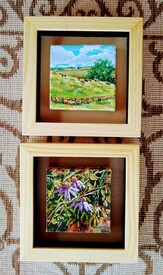
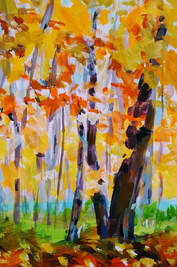
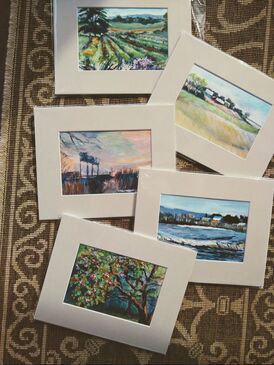
I love the expressive quality of watercolor. It serves as an outlet, a way to lose myself in art.
I've recently had the privilege of teaching beginning watercolor and observing others develop a sense of the medium. I am grateful for students who truly want to learn about art.
The beauty of this medium is that it requires minimal tools, little space, and hardly any messiness. It's easy to pick up and paint during the day or evening at the kitchen counter or sitting outdoors.
Feel free to contact me and I will be glad to give a few suggestions on how to get started. |
|
Great talent, innovative leader, mentor, legacy of important work -- Artist and Printmaker Mauricio Lasansky passed away earlier this month. Many young printmakers at the University of Iowa were fortunate to have Mr. Lasansky for a teacher and mentor and some have gone on to head printmaking departments across the country.
Mr. Lasansky was born in Argentina and eventually came to Iowa to teach at the University of Iowa for 39 years. He raised his family here, as well establishing a top printmaking program.
Among his most important work were the Nazi drawings, 30 pieces that explored the depth and horror of the Nazi regime. He did these at the time of the pop art decade of the 60s. Quotes from family, students, and colleagues depict a man of integrity who committed heart and soul to art, and who continued to learn from others throughout his life.
Iowans have enjoyed the good fortune of living alongside those who have dedicated themselves to elevating art in our state.
To see up-and-coming or regionally known local artists, don't miss the Cedar Rapids Museum of Art's Lure of the Local. It runs until May 13, 2012. |
New Painting! Introducing "Bean Field"
|
|
|
|
|
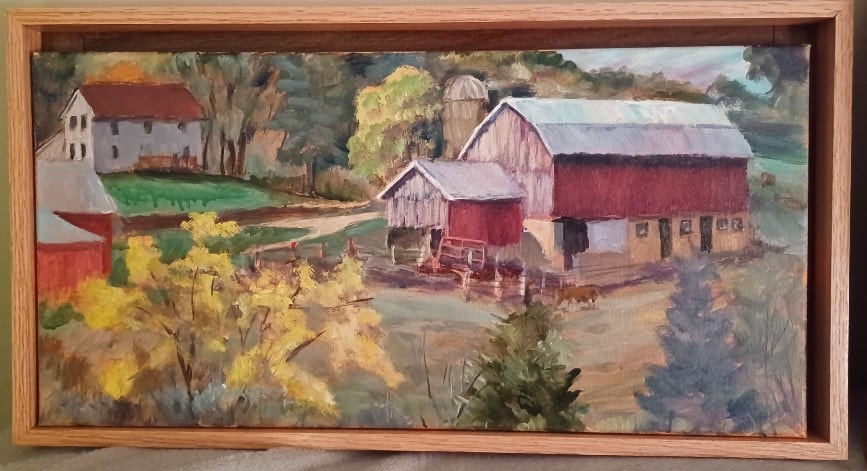
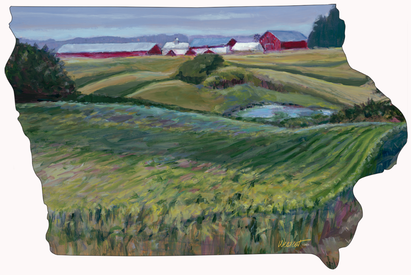
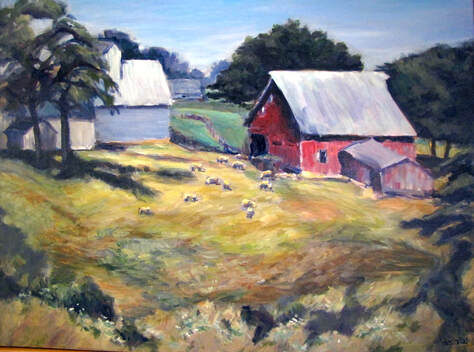
Announcing a new addition to the Local Landscapes series inspired by an autumn trip to the Anamosa area. Bean Field is set against a farm just east of Anamosa.
I have been watching fields of soybeans turn color throughout fall for years. After starting landscape paintings, I have noticed them more intently. Green, yellow-green, gold, yellow-red, rusty-red, brown, and more...in shades that vary across the field.
It was great to get a photo that captured a few of these colors with an array of farm buildings and the windmill in the background.
Bean Field, by Lianne Westcot, Acrylic on canvas, 10" x 20". Limited edition prints signed by the artist are available here. . |
|
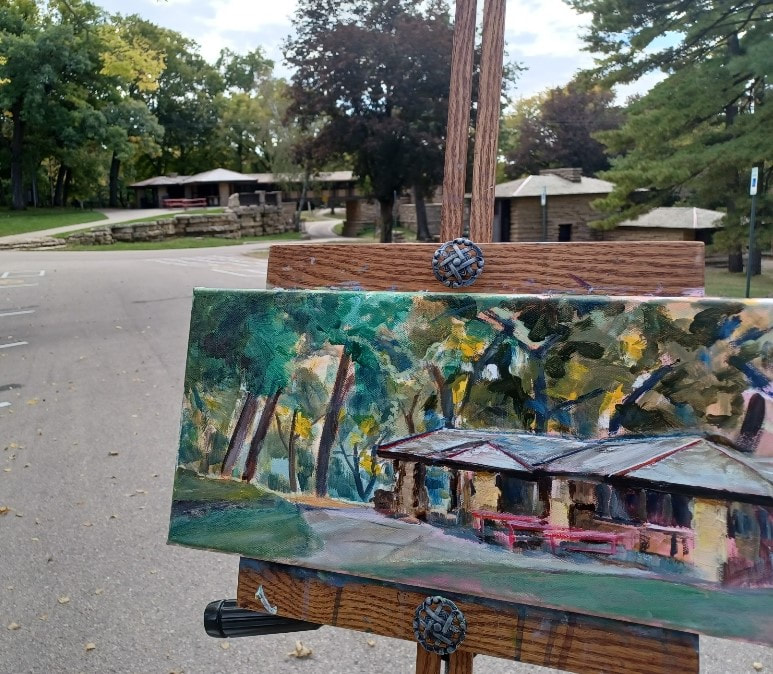
I was working in the studio and decided to snap this photo of a painting in progress. I should say "in process" as that's closer to the truth. Progress implies I have a plan and understand where it's going. Frankly, I am on the edge of my seat most of the time.
(FYI, it's not good to leave brushes in the water, but the pic looked odd without them.) |
|
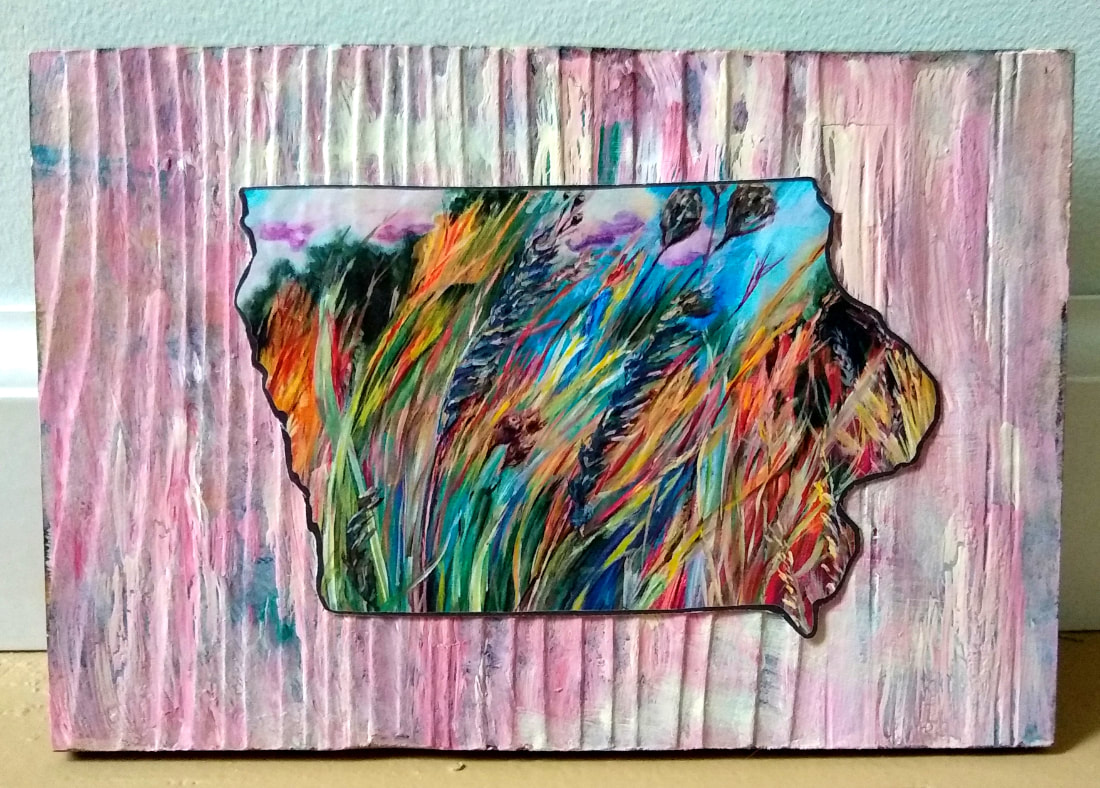
It's a lot of fun to share art with people who truly appreciate it. Kristy works at a print shop and saw Grassy Field when I was ordering art cards last fall. I was re-ordering cards before Christmas when she decided to buy a print.
I had asked to hear about her framing selection so she emailed me a description. About the final product she said, "There is a 'peace' about it ... the colors ... the mood. It just makes me feel good."
As I said, sharing art is fun! |
|
Today was one of those days.
While on my way to errands and work I passed through some really great scenes. It had snowed--white fluffy snow--and the wind was picking it up and blowing it around pretty hard. While this was not welcomed by drivers or those trying to scoop their walks, it was creating some masterpiece landscapes.
In this weather Iowa looks like the oceanside as the snow is sculpted by the wind into beautiful dunes along fence lines and ditches. Stands of trees were covered in white and looked beautiful against darker branches and the billowy blue-gray sky. Add to that, snow on hilltops was being whisked by the wind creating a lovely airbrush effect against the background farmhouses, barns, and trees.
But it was one of THOSE days when every time my eyes framed a scene it just happened I was not able to pull over to snap a photo. In better weather I might pull onto a side road, but that was risky without all wheel drive today. I did get a few photos and I hope they do justice and make it possible to capture this day on canvas.
............................ UPDATE: Here are a couple of photos! .................................................................

|
Bald Eagles: Back in the Midwest
|
|
|
|
|

People are excited about the bald eagle becoming a common sight on the Iowa landscape and around the midwest. I was excited to see two of them circling over the lane outside our house. I am used to seeing them at a distance; apparently they can fly up to 10,000 feet.
The Bald Eagles Fact Sheet reports their "wingspan ranges from 72 to 90 inches." Yes indeed, and they are extraordinary when flying nearby!
PS: A quick web search will bring up towns along the Mississippi that are getting into the tourism of eagle watching. Sounds like a great way to deal with cabin fever. |
Art Movies to Like or Love
|
|
|
|
|
When it's down time and I'm not negotiating with my loved ones about what to view, I love to watch a good art movie. If you enjoy art movies or documentaries, here are some to try:
Wasteland - Renowned artist Vik Muniz embarks on one of the most inspired collaborations of his career, joining creative forces with Brazilian catadores -- garbage pickers who mine treasure from the trash heaps of Rio de Janeiro's Jardim Gramacho landfill.
The Cats of Mirikitani - Documentary about red-bereted Jimmy Mirikitani, a feisty painter working and living on the street, near the World Trade Center, when 9/11 devastates the neighborhood. (There is an interesting unveiling of Mirikitani's life, art, and America's history in this documentary.)
Séraphine - Awestruck by the vibrant and imaginative artwork of uneducated housekeeper Séraphine Louis (Yolande Moreau) -- who spends her days doing menial chores -- German art critic Wilhelm Unde (Ulrich Tukur) takes the promising painter under his wing.
Between The Folds - Filmmaker Vanessa Gould takes you on a provocative odyssey into the mesmerizing world of modern origami, where artists and scientists use the ancient art form to craft works of delicate beauty and to model cutting-edge mathematical theories.
The Rape of Europa - Joan Allen narrates this documentary that chronicles 12 years of the Nazis' pillaging works of art throughout Europe and the international effort to locate, protect and return millions of valuable treasures.
And some design movies:
Helvetica - We use it every day on our computers, we see it on street signs -- and we take it for granted. Now, Gary Hustwit's unique documentary introduces us to Helvetica, a font whose readability has made it the most popular in the world.
Visual Acoustics - Filmmaker Eric Bricker directs this fascinating documentary about the life and times of architectural photographer Julius Shulman, whose work is known for helping to launch the careers of giants like Rudolf Schindler and Frank Lloyd Wright.
Art & Copy - (has Apple existed since your were born? You may be too young for this one!) Filmmaker Doug Pray explores the fascinating and mysterious world of advertising in this compelling documentary, which includes interviews with the talented minds that created famous taglines such as "Where's the Beef?" and "Just Do It." |
|
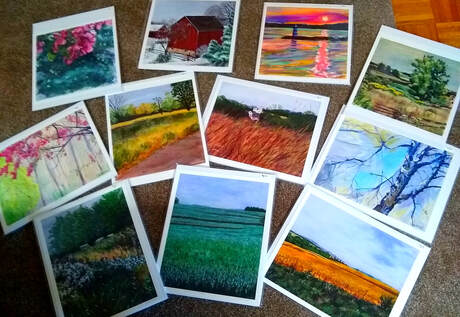
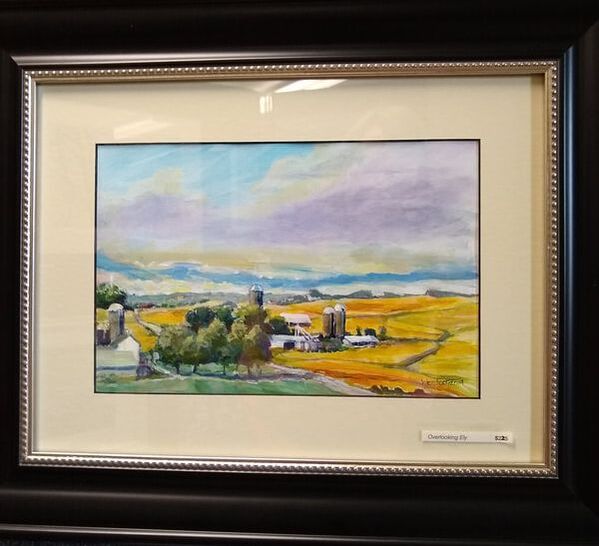
Landscapes and vignettes capture me. I often carry a camera and there are some days when I feel fortunate to arrive at my destination. When I select a scene to paint, it's something I appreciate and want to see many times. I think of it as a window looking out onto some picturesque view.
I am excited to do more scenes just to see how they look in paint. Will they still capture my interest? Stay tuned, and stop back any time to read or see if new work is posted. |
|
There was a man who owned the greatest collection of now-priceless 20th century European art in the US and probably the world. The collection has resided for years in a modest art school building in suburban Philadelphia. (A documentary, The Art of the Steal, tells the story of this collection and what is happening to it).
How did Dr. Albert C. Barnes come to own a collection including dozens of masters like Renoir, Cezanne, and Matisse? After all, he came from a working class family and was trained as a chemist and medical doctor. In his 30s, Barnes became interested in art and tried painting, but he didn't feel skilled enough. He commissioned his schoolmate and painter William Glackens to purchase $20,000 worth of European art for him. Thus began the prized Barnes Collection.
The documentary is strictly from the view of those who oppose the Barnes Collection being moved. It raised many deep questions that I still ponder. For example, what is the "right" of the general public to view important art? And who gets the money that is made? I cherish the fact that I learned about this collection because it staggers my mind to think about it. Why? A great portion of the artists I saw splashed across the milky slide screen of college art history -- have multiple works in the Barnes collection.
Consider that the lesser works of these same artists such as Van Gogh and Gaugin which are on the open market sell at auction for hundreds of millions of dollars. Consider that Dr. Barnes paid $300 (about $6500 today) for Picasso's Peasants and Oxen and picked up many canvases for $1. The Barnes' coveted paintings are not for sale, and further, Barnes took steps to cover the costs of maintaining the collection and to make sure it stayed in its home long after he passed.
It's unlikely that Dr. Barnes invested in art for profit. He left express wishes that it be used for strictly educational purposes. Before he died in 1951, he left explicit instructions that his art was never to be loaned or sold, but would always be hung in the original education building.
Barnes initially bought a few paintings on his own, but Glackens informed him they were substandard, and that he should look to Europe. This is what prompted him to dispatch his friend overseas as his buying agent. It took a while for Barnes to appreciate the modern style which critics called vulgar, childlike scribbling, and "not art at all." But he came to appreciate the works. Subsequently, he traveled and developed his personal sensibility of what constitutes great art. He used his experience and gut to make all of his art purchased from then on. It turns out his "gut" produced a collection that is unparalleled in modern 20th century European treasures.
So, why collect art? Taking a lesson from Dr. Barnes, it's to learn and to discern. To become educated and make the best gut decision about what will have value, monetary or otherwise, over time.
The original building in Merion, Pennsylvania was designed to be an intimate viewing space. In the information age, it is not quite the same experience to see them online. Political maneuvers and legal wrestling has turned over control of the collection, and now you can find all of the images online. Check out this site which continues to work for the intent of the owner, Dr. Barnes. |
|
|